Käkisalmi – a school town since the 17th century
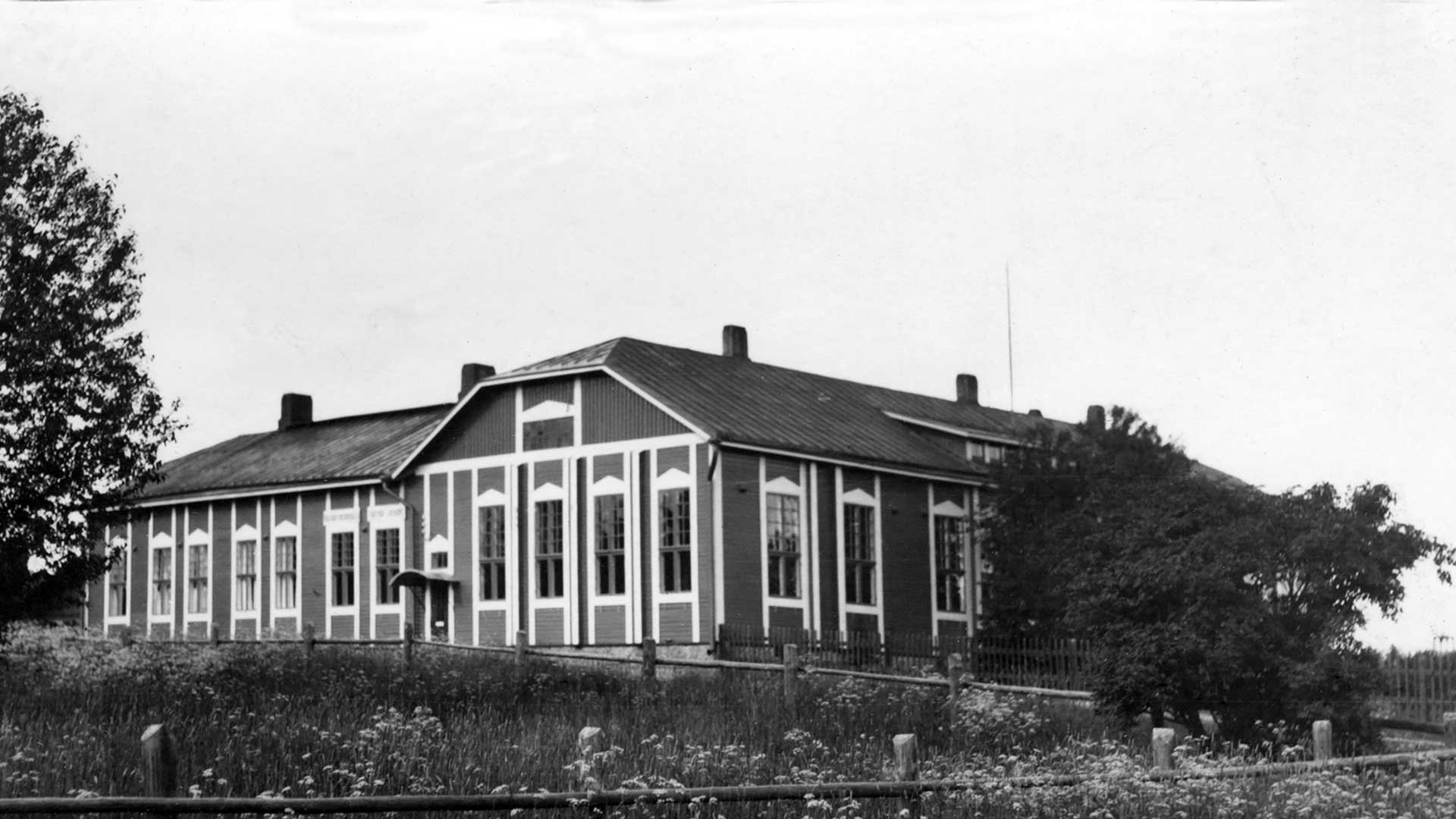

Käkisalmi had been a school town since the 1630s, but the first modern secondary school (realskola) and bourgeois school only began operating in 1892. Before this, teaching was mainly the responsibility of schools for poor children maintained by the Käkisalmi Town Women's Association, the first of which was founded in 1855.
In the 1870s, primary schools were still few and far between in the parishes of Karelia. Travelling schools were considered sufficient, but primary schools improved reading and arithmetic skills and prepared young people for working life.

Dedication of Puusti primary school 1929.
Everyday life in the primary school
Children started school at the age of seven. School days were six days a week, but holidays were given at Christmas, Easter, in the winter and a long one in the summer. Schoolbooks were provided by the school, but packed lunches were brought from home. In the autumns, the schoolchildren gathered berries for the school kitchen, but were also given time off for potato harvesting.
Subjects included religion, writing, reading, arithmetic, geography, history, singing, physical education as well as crafts, drawing and gardening. Study circles were also established in primary schools, where patriotism, agriculture and thrift were studied, and practice was given in public speaking and acting.
Teachers had the right to disciplinary measures – common punishments included detention and written reprimands sent home. The primary school often became the intellectual centre of the village, and the teacher was an important figure in youth society activities, among other things. The courtyard of Käkisalmi Castle was a popular venue for spring celebrations.
Käkisalmi rural parish primary schools
The first primary school was established in Norsjö in 1885. It operated initially in the town and later in various villages, until it got its own school building in 1892.
The Finnish Lifelong Learning Foundation established schools in Sakkola (1910), Suotniemi (1912) and Vuohensalo (1913), when the rural municipality of Käkisalmi failed to establish schools despite the governor's orders.
Tenkalahti School started in 1909 and initially operated in the town. Its own school building was completed in 1910 and a new, expanded school building in 1925. In 1923, the village of Pärnä got its own school district and the lower primary school started in 1929. The lower primary schools of Marjalanniemi and Suotniemi also started in the same year, as well as Puusti primary school, which was established due to a lack of space.
The Porkanniemi-Haminanniitty school district was established in 1933, and the Porkanniemi primary school was founded within it. The area previously belonged to the Tenkalahti school district.

Käkisalmi Co-educational Secondary School was completed in 1935.
Comprehensive school and further studies
For secondary school studies, a co-educational school was established in Kexholm. The five-storey co-educational secondary school, built by the state, was completed in 1935 and was one of the tallest buildings in the town after the churches.
Rural youth headed to grammar schools in towns. For agricultural studies, they headed, for example, to the Räisälä People's College and the Ylävuoksi Agricultural School.