Evacuated from Käkisalmi – The arduous road of a Karelian town 1939–1944

The first evacuation before the Winter War (autumn 1939)
When the threat of the Winter War became apparent in autumn 1939, the residents of Käkisalmi were ordered to be evacuated to Ostrobothnia.
The townspeople was placed in Ähtäri.
Rural municipality residents we were directed to Ylistaro, Lapua and Nurmo.
In Ähtäri, livelihoods were scarce, and many families moved closer to Southern Finland on their own accord. By the summer of 1940, only about 500 to 600 people from Käkisalmi were still living in their official evacuation locality. The plains and marshy lands of Ostrobothnia were a strange living environment for the Karelians, which increased the difficulty of adaptation.
Care Committees – Temporary Administration in a New Environment (April 1940)
The administration of the municipalities in the ceded Karelian territories was organised management committees wards, which were lighter in structure than the former councils.
| Board of Management | Chairperson | Other members | Location |
|---|---|---|---|
| Käkisalmi town | August Kärävä | Arvo Helle, Jaakko Kuntsi, Juho Martikainen, K. V. Pälvi | Heinola (branch office in Ähtäri) |
| Käkisalmi rural municipality | Antti Vuohelainen | Ferdinand Andersin, Simo Ulaska, Tahvo Rahkonen, Juho Tontti | Heinola, Hartola, Sysmä, part of Asikkala |
The city board relocated its operations to Heinola after its very first meeting. Heinola resembled Käkisalmi in many ways: the flowing Jyrängönvirta rapids were reminiscent of the Vuoksi, and wood processing provided work.

The families of Juho Pärssinen and Iida and Matti Kärnä, who returned to Norsijoki in April 1942, with their repatriation allowance.
Return and reconstruction at the beginning of the Continuation War (1941–1943)
Finnish troops recaptured Käkisalmi in August 1941, but the town was almost entirely destroyed: only about 60 buildings could be repaired for residential use, bridges and underpasses had been blown up. Reconstruction began briskly, and the railway connection was opened as early as 27.1.1942.
The rural municipality had survived the Winter War with less damage. Returnees were lured back to secure the nation's food supply. By the end of 1942, the countryside was already home to over 3,800 people (men, women and children). There were 3,156 hectares of arable land under cultivation, and cooperative stores and private shops opened their doors. Faith in the future was reflected, for example, in the modern mill in Norsjoki and the renovation of the sawmill.
Second evacuation during the major offensive (June 1944)
 Following the start of the Soviet major offensive in June 1944, a new and more precise evacuation plan was initiated.
Evacuation managers: in the town Arvo Tenkanen, in the rural municipality Antti Vuohelainen (replaced due to illness by Simo Ulaska).
Voluntary departure by bus to Savonlinna began immediately after the attack started; on 20–23 June 1944 the evacuation expanded into a full-scale operation.
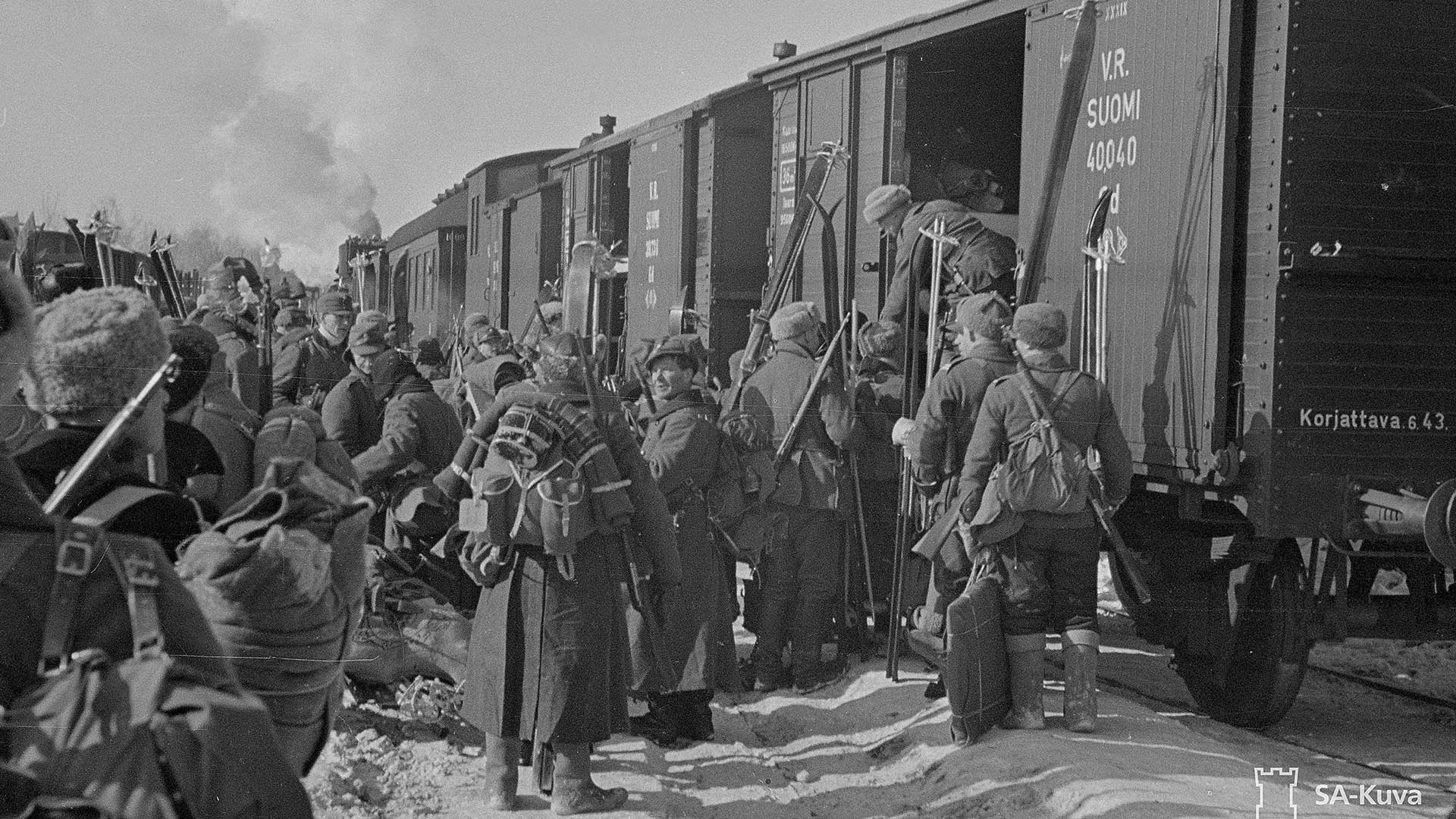
Townspeople gathered at the Hakala bomb shelter and were loaded onto trains – rural municipality residents were transferred by cars to Parikkala and from there onto the railways.
New investment locations
| Population group | Destination in Ostrobothnia |
|---|---|
| City | Seinäjoki rural municipality |
| Rural municipality | Alavus, Peräseinäjoki, Töysä |
Lorry convoys transported movable property to Simpele, from where trains took the goods further to stops in Ostrobothnia. Not all loads reached their destination, but the attempt was determined.
Final surrender and a new beginning (autumn 1944)
19.9.1944 – Finland and the Soviet Union signed an armistice agreement.
21.9.1944 – The last civilians arrived safely in Ostrobothnia.
23.–24.9.1944 – Käkisalmi was ceded to the Soviet Union.
Karelians had to start yet another new life as evacuees. Heinola, Southern Häme and the municipalities of Ostrobothnia became a permanent home for many, and Karelian culture took firm root in the new landscapes.