Lake Ladoga used to be Lake Neva
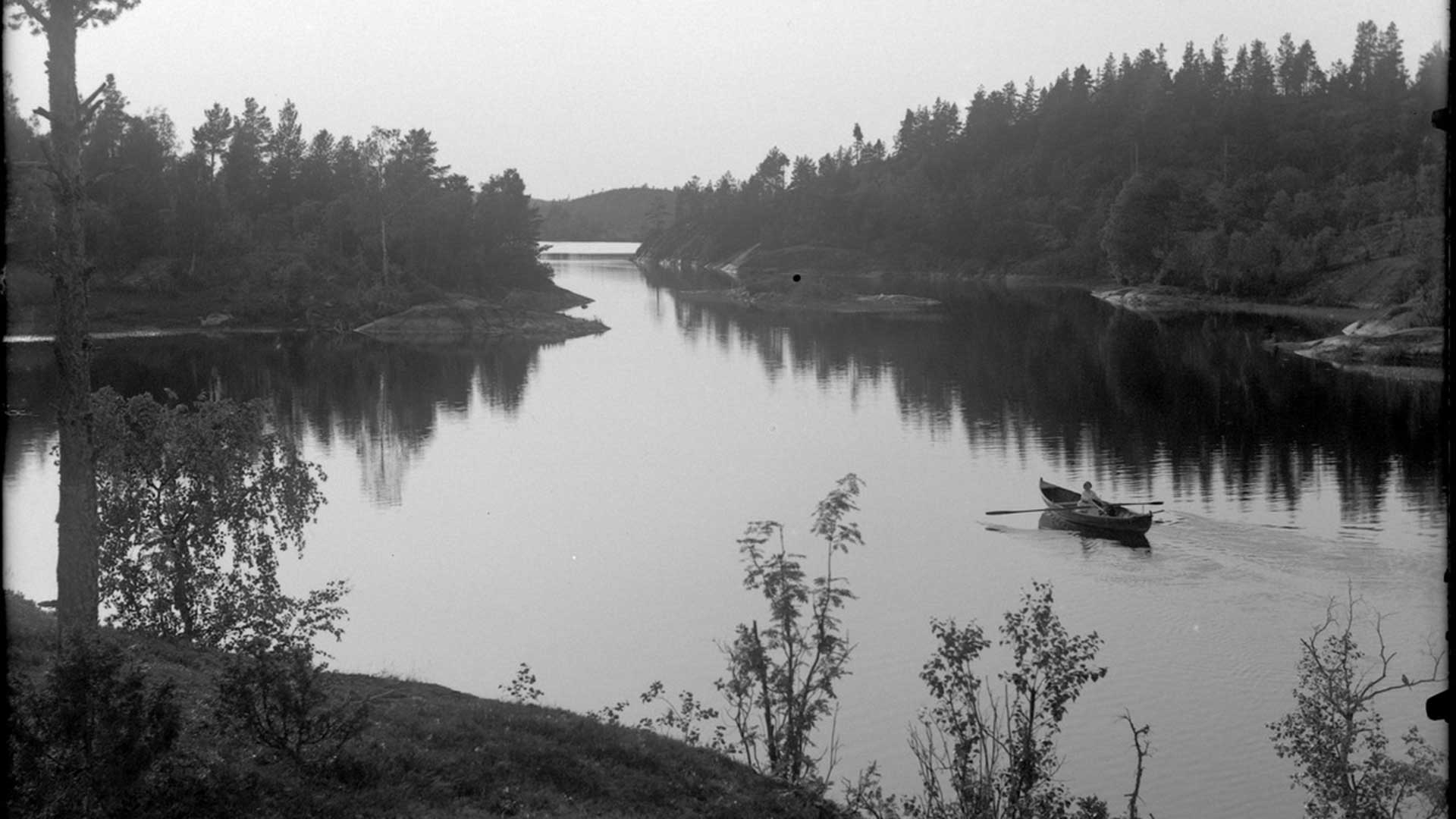
Lake Ladoga has not always been Lake Ladoga. People speaking Finnic languages called Europe's largest lake Lake Neva, and this name was also used by the Russians as late as the 16th century. Evidence of this is a document drawn up in 1556 by Jaakko Teit, secretary to King Gustav Vasa of Sweden, in which a Russian named Nousia describes the travel route from Kexholm to the Gulf of Bothnia to Oulu:
The parish of Nousia, situated above Nogårdh, between the White Sea and Nävajervi (the Russians call the lake that lies between Nogårdh and Nöteborg Nävajervi), contains large bogs and fens; from these same bogs water flows out, towards both the White Sea and Nävajervi.
According to historian Saulo Kepsu, the River Neva, the outlet of Lake Ladoga, got its name from Lake Neva, which means a swamp lake. Kepsu states that the shores of Lake Ladoga are low-lying and partly marshy at the southern end and to the north of the head of the River Neva.
According to a competing view, the name of the River Neva is based on an Indo-European adjective *Newa, meaning ’new’. This has been argued on the grounds that the River Neva was formed only around 1350 BCE, by which time the shores of Lake Ladoga were already inhabited, and the inhabitants would have named the newly formed river the ’New River’. This view is supported, for example, by Juha Janhunen, Professor of East Asian Languages and Cultures at the University of Helsinki.
Docent in Indo-European and Finno-Ugric linguistics Petri Kallio rejects the claim on the grounds, among others, that there is no Indo-European nomenclature in the vicinity of the River Neva that predates the arrival of Scandinavians and Slavs in the region in the 7th century AD. By that time, the Neva was already around 2,000 years old, so it was no longer particularly new.
The name Ladoga also has its origins in Finnic languages. Ladoga, or Ladoga Castle, was a significant town from the 8th century onwards and a key trading post on the Vikings' Great Trade Route to the East. The Vikings used the name Aldeigjuborg for the town, meaning Aldeigja Castle. The town is situated on the River Volkhov, which flows into Lake Ladoga, a few kilometres from the river mouth.
Petri Kallio states that the name Ladoga is a recent Russian loanword from the name denoting Ladogaburg (LadogaLadoga's Old East Slavonic name Nevo it was borrowed from its original Finnic name.
In a publication of the Finno-Ugrian Society released in 1906, linguist Jooseppi Julius Mikkola highlights earlier theories according to which the name Ladoga has evolved through phonetic changes from the word Aldeigja, meaning that the original Russian form of the name is the town name used by the Scandinavians. This theory is now widely supported.
Researchers still conclude that the name Aldeigja comes from the name of the tributary Ladozhka, which flows into the River Volkhov. The town is located at the confluence of the rivers. The old name of the tributary is of Finnic origin. *Aload-yogi, where the first part of the name shares the same root as the word alava, meaning the name refers to a shallow river.
SOURCES
Grotenfelt, K. (1894): Jaakko Teitti's list of grievances against the Finnish nobility 1555-1556,
Documents on the History of Finland V.
Kallio, Petri (2018). The Uralic background of Old Karelian.
Kepsu, Saulo (2012): Joennimet. Virittäjä 2/2012.
Janhunen, Juha (2009). Some additional notes on the macrohydronyms of the Ladoga region. Studia Etymologica Cracoviensia.
Mikkola, Jooseppi Julius (1906): Ladoga, Laatokka. Finno-Ugrian Society, Helsinki.
Ney, A., Williams, H., & Charpentier Ljungqvist, F. (Eds.). (2009). á austrvega. Saga and East Scandinavia : Preprint papers of The 14th International Saga Conference. Uppsala 9th-15th August 2009. Retrieved from https://urn.kb.se/resolve?urn=urn:nbn:se:hig:diva-4837


