Fishermen of the Karelian Sea lived at the mercy of nature
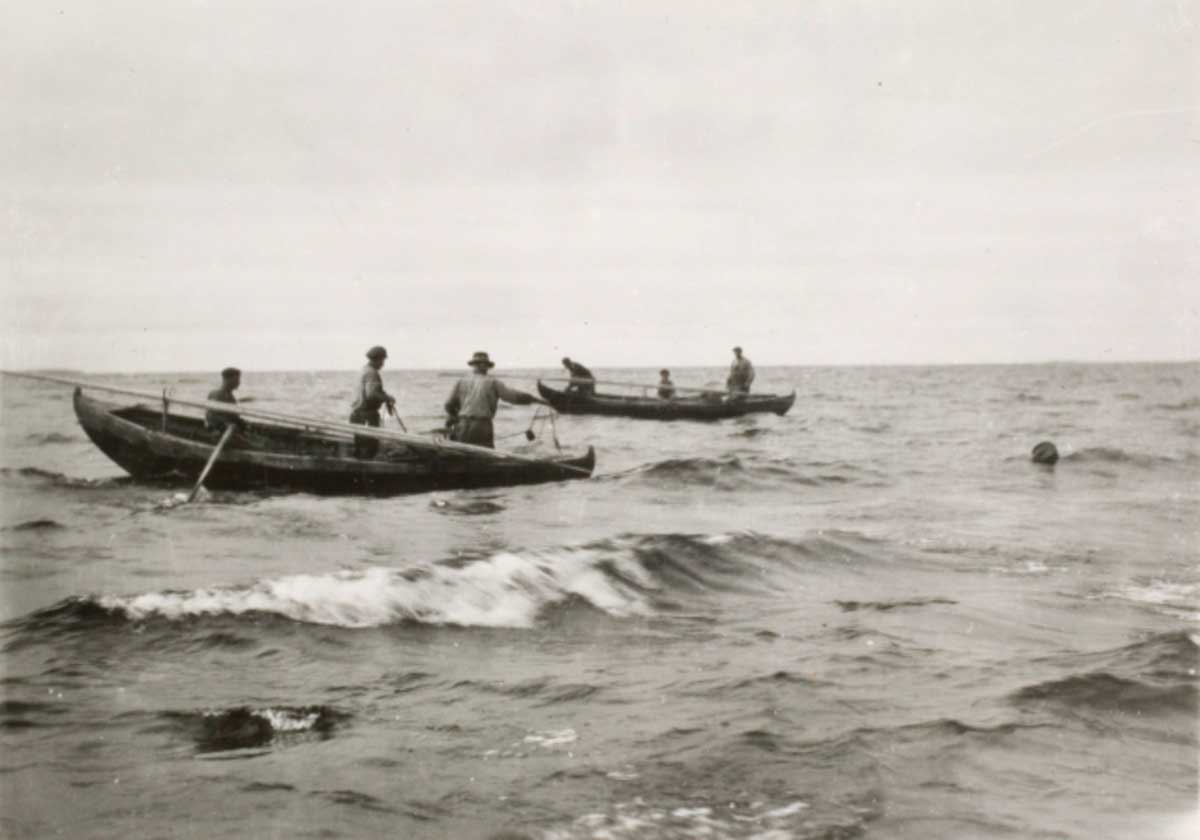
The early hours are only just turning into a grey dawn as the boat pulls away from the shore of Lake Ladoga. The air is calm, but experienced fishermen know that the lake can turn merciless in an instant.
Europe's largest lake does not forgive mistakes. On Lake Ladoga's open waters, waves quickly rise high, fog swallows directions, and cold water strains boats and men. One of Northern Europe's most significant fishing cultures has been born on Ladoga.
Lake Ladoga was not merely a lake to the Karelians. It was a workplace, a larder, a thoroughfare and a way of life.
In the daily lives of Finnish fishermen, Lake Ladoga fishing was roughly divided into two main forms: open-water fishing and coastal fishing. Salmon, char and pikeperch, which moved about the vast open waters following smelt, vendace and other small fish, were fished for especially in the open waters. Long-distance fishing used nets, longlines and ring nets, and the work was almost exclusively done by men.
In coastal fishing, on the other hand, various seines and shore nets were used. The smallest seines could be pulled by two people, but the largest whitefish seines required the cooperation of up to ten fishermen. In shore seining, women also often participated actively in the fishing.
In the 1930s, fishing and seal hunting on the Finnish side of Lake Ladoga provided a livelihood for about 15,000 people. In 1934, commercial fishing was practised by 2,117 households. As late as the early 1930s, there were 2,576 rowing and sailing fishing boats and 269 motorboats in use on Lake Ladoga.
Motorboats concentrated particularly on the south-west of Lake Ladoga in the areas of Metsäpirtti and Käkisalmi, where large-scale open-water net and longline fishing was practiced. Generations fished along its shores, built boats, developed original gear, and learned to know the behaviour of water, wind, and fish almost instinctively.
A lake like the sea
Lake Ladoga is such a vast body of water that it is often compared to a sea. The surface area of the lake is 17,890 square kilometres, meaning it is about four times the size of Lake Saimaa. The greatest length of Lake Ladoga is 210 kilometres and its width is 130 kilometres. The lake contains as much as 840–910 cubic kilometres of water – more than all of Finland's lakes combined.
Lake Ladoga's cold and deep waters have also been among its special features. They created ideal conditions for salmonids, for which the lake became known far beyond Karelia.
The mean depth of Lake Ladoga is 47 metres and the deepest point is as much as 230 metres.
The deepest area is located between Valaam and Lahdenpohja. The northern part is rocky, fractured and in places very deep, whereas the southern shores are shallower and have softer bottoms. Large open expanses of water form open reaches where the weather can change in an instant.
The fishermen’s lives were dictated by the rhythms of nature. The wind might prevent them from going out to sea for days on end, but when the weather was good, they had to set out, even if they were tired or their hands were stiff with cold. Fishing was hard, physical labour.
Kingdom of the Salmonoids
The areas of Käkisalmi and Metsäpirtti on the western coast were particularly known for salmon fishing, whereas in the archipelago areas of Sortavala and Salmi, whitefish fishing formed the most important livelihood for many villages.
The fish fauna of Lake Ladoga was exceptionally diverse. Dozens of fish species lived in the lake, many of which were prized game fish.
The best-known were landlocked salmon, whitefish, char, grayling and smelt.
Particularly Ladoga salmon was considered high quality and valuable. Its flesh was fatty and tasty, and it became an important trade commodity. For many coastal villages, salmon fishing was the primary source of livelihood.
Whitefish, on the other hand, formed a broad and steady catch base. It was fished in large quantities, especially in the archipelago areas and northern shores of Lake Ladoga.
But Lake Ladoga was also home to rarer species. Historical records mention, for example, the sturgeon, which could grow to enormous sizes. In the 19th century, sturgeons weighing over a hundred kilograms were caught. Catches like these were events that were talked about for a long time.
Communities from the Nuottakunnat region
Fishermen and seine fishing cooperatives on Lake Ladoga developed their own fishing methods, specifically suited to the lake’s changing conditions. Many of these fishing gear types differed markedly from those used elsewhere in Finland.
Among the best known was the tarpuska, or tarvontaverkko. It was a fishing gear used particularly for catching whitefish, the use of which required experience and cooperation.
The fishermen lowered the net into the water and herded the fish towards it. The task required a keen eye and the ability to read the movements of the water. The behaviour of the fish, the weather conditions and the time of day all played a part in their success.
The nets were large and heavy to handle. A wet net weighed a lot, and the cold water made the work even harder. Still, experienced fishermen could handle the gear with astonishing speed.
Large seine nets were also used on Lake Ladoga. Summer seine nets could reach lengths of hundreds of metres, so fishing on Lake Ladoga was not a lonely job. Thus, seine crews were formed – fishing groups in which everyone had their own task.
One steered the boat, the second checked the nets, the third was responsible for handling the catch. Experience counted for a lot. The oldest fishermen knew the best fishing grounds and were able to assess the weather from even the smallest signs of the sea.
The working days were long. They often set out onto the water before sunrise, and the processing of the catch continued back on shore. The fish were salted, dried or taken away to be sold.
Fishing brought village communities together. Boats were built collectively, gear was repaired at working bees, and experiences were shared on the shore in the evenings.
A dangerous lake fostered a Karelian identity
Lake Ladoga provided a livelihood, but it also exacted its toll. Sudden storms were a constant fear for the fishermen. Calm weather could turn into fierce waves in an instant. Particularly dangerous were the autumn storms, when the cold water and strong wind made small boats vulnerable.
Many fishermen lost their lives on the lake. Yet they still went out onto the water time and time again, as there was not always any other way to make a living.
Fishermen on Lake Ladoga were required to possess exceptional stamina. They had to be skilled at boating, know their fishing gear and be able to interpret the signs of nature. This expertise was passed down from one generation to the next.
In Karelia, Lake Ladoga was more than just a natural landscape. It was part of people's identity.
Fishing involved a strong sense of community and its own culture. The influence of the lake was visible in the fishermen's speech, customs and work rhythm.
The seasons set the pace of life: in spring, people waited for the ice to break up; in summer, they were in the midst of the busiest fishing season; and in autumn, they prepared for the storms.
For many families, fishing shaped the course of their entire lives. Children learnt the skills associated with boats and nets from a young age. For those who grew up on the shores of Lake Ladoga, the lake was both familiar and unpredictable.


