Karelian ancient hillforts
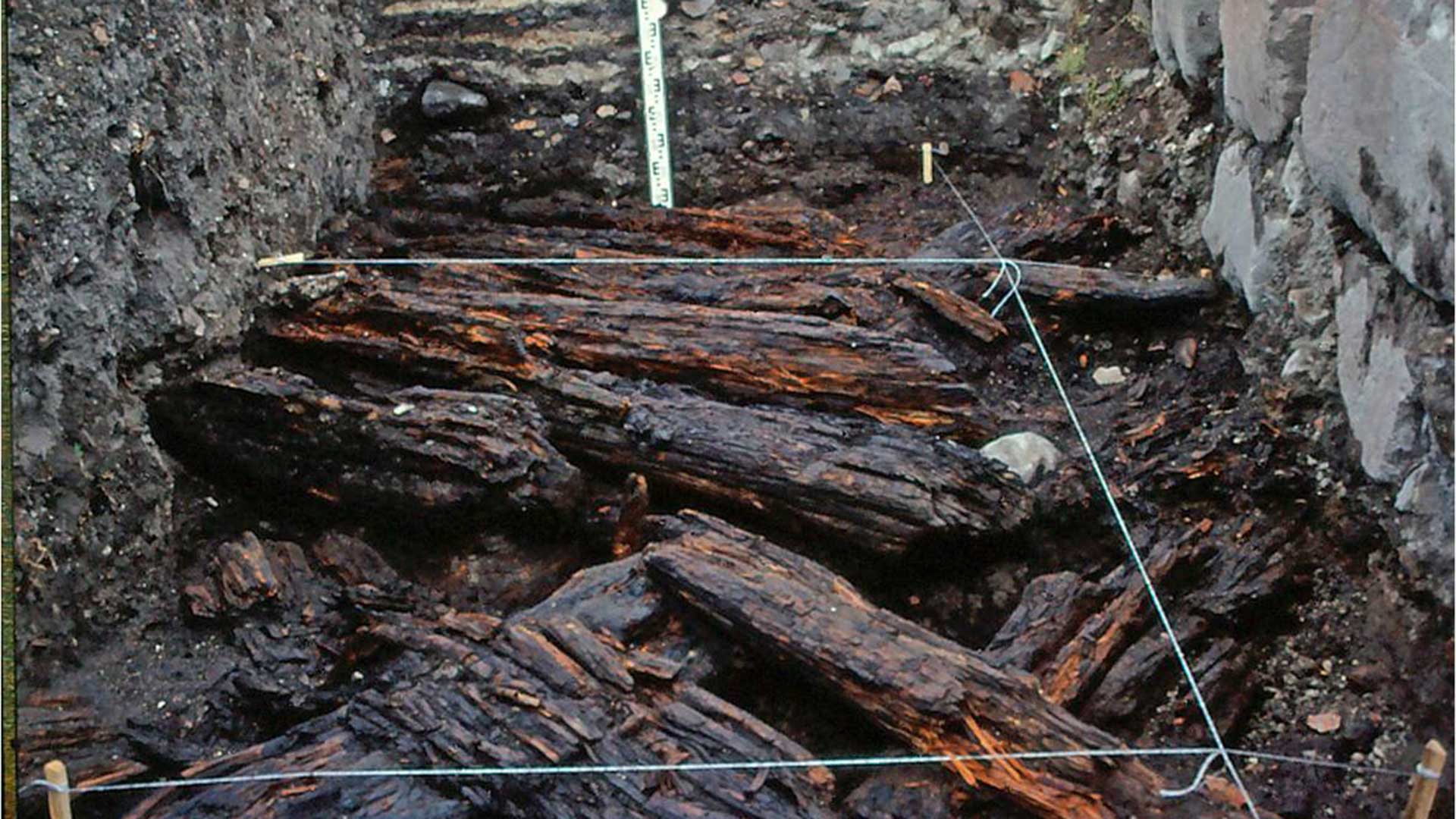
Hillforts are elevated terrain features or islands with man-made stone or earth ramparts or other structures built by humans. In the region of Ceded Karelia, there are numerous places whose names refer to a castle or to monitoring. There are particularly many castle-related names in the Vuoksi region and on the north-western shore of Lake Ladoga, where high and steep cliffs are typical of the landscape. A place name referring to a castle may have been given to an exceptionally high, rugged, steep-sloped or inaccessible cliff, even if it has never functioned as a castle.
40 ancient hillforts in Karelia
 According to archaeologist Pirjo Uino, a total of 40 ancient hill forts are known to exist in the ceded region of Karelia. This figure includes only sites where stone ramparts or other structures can be observed that are unlikely to have formed naturally. In addition to these, there are another forty or so ancient hill forts whose existence is uncertain or unconfirmed.
Castles located on the mainland are usually situated on hard-to-reach crags near a lake or river. Some castles, such as Vyborg Castle, were established on small rocky islands. Many castles in the Sortavala and Kurkijoki regions are located on large islands in the Lake Ladoga archipelago, where water provides a natural defence on at least one side.
Hillforts equipped with stone or earthen ramparts have been interpreted as defensive and refuge sites during surprise attacks when the fortresses were located close to ancient settlements. Fortresses situated further away, at a distance of more than three kilometres, could not have functioned as places of refuge, according to archaeologist Jussi-Pekka Taavitsainen, who wrote his doctoral thesis on Finnish hillforts. According to him, so-called remote hillforts may have functioned as assembly points for troops. Pirjo Uino considers it possible that the remote hillforts also served as bases for organised fur trapping, where valuable furs could be stored.
Tiurinlinna in Räisälä, Kexholm Castle and Vyborg Castle differ from hillforts in terms of their status and purpose. They are situated on small, low-lying islands and feature a cultural layer containing a wealth of finds, as well as various structures. These sites functioned as centres for trade and craft, which needed to be protected with fortifications.
The construction period of most of Karelia's ancient hillforts cannot be determined by archaeological means, because no artefact finds enabling dating have been made at the forts. Even if there were finds, it is not necessarily known when the objects ended up in the area of the fort.
Human activity at the Karjaa hillforts already from the 8th to the 12th centuries
However, Pirjo Uino concludes that the Karelian hillforts in which finds from the Merovingian or Viking Age have been made experienced human activity in the years 700–1100 AD. According to researchers, migration moved from Western Finland to Karelia during those centuries, and newcomers may also have brought with them the idea of fortifications.
For centuries, the north-western shore of Lake Ladoga formed its own economic region, the population of which had an interest in defending themselves against various groups. As early as the mid-eighth century, the Vikings had settled to the south of Lake Ladoga along the Volkhov River at Ladogaborg, or Staraja Ladoga, and from there engaged in the fur trade with the Karelians, among other activities. Pirjo Uino notes that not all traders travelled with peaceful intentions. Historical sources document military campaigns between Novgorod and Karelia on the one hand, and Tavastia on the other, during the twelfth and thirteenth centuries. The power struggle between Novgorod and Sweden intensified in the thirteenth century.
The 1323 Treaty of Nöteborg between Sweden and Novgorod divided the Karelian Isthmus lengthways in two and forbade the building of castles on either side of the border. According to Uino, archaeological finds and historical sources suggest that the majority of Karelia's hillforts would have been equipped between 1100 and 1323, but the use of the castles may have continued in later times as well.
Sources:
Pirjo Uino (1997): Ancient Karelia – Archaeological Studies. Muinais-Karjala – Arkeologisia tutkimuksia. Suomen Muinaismuistoyhdistyksen Aikakauskirja 104.
Pirjo Uino (1998): Luovutetun Karjalan muinaislinnoista. Publications of the Viipuri Literary Society 12.


