The tourist appeal of Sortavala, Käkisalmi and Valaam
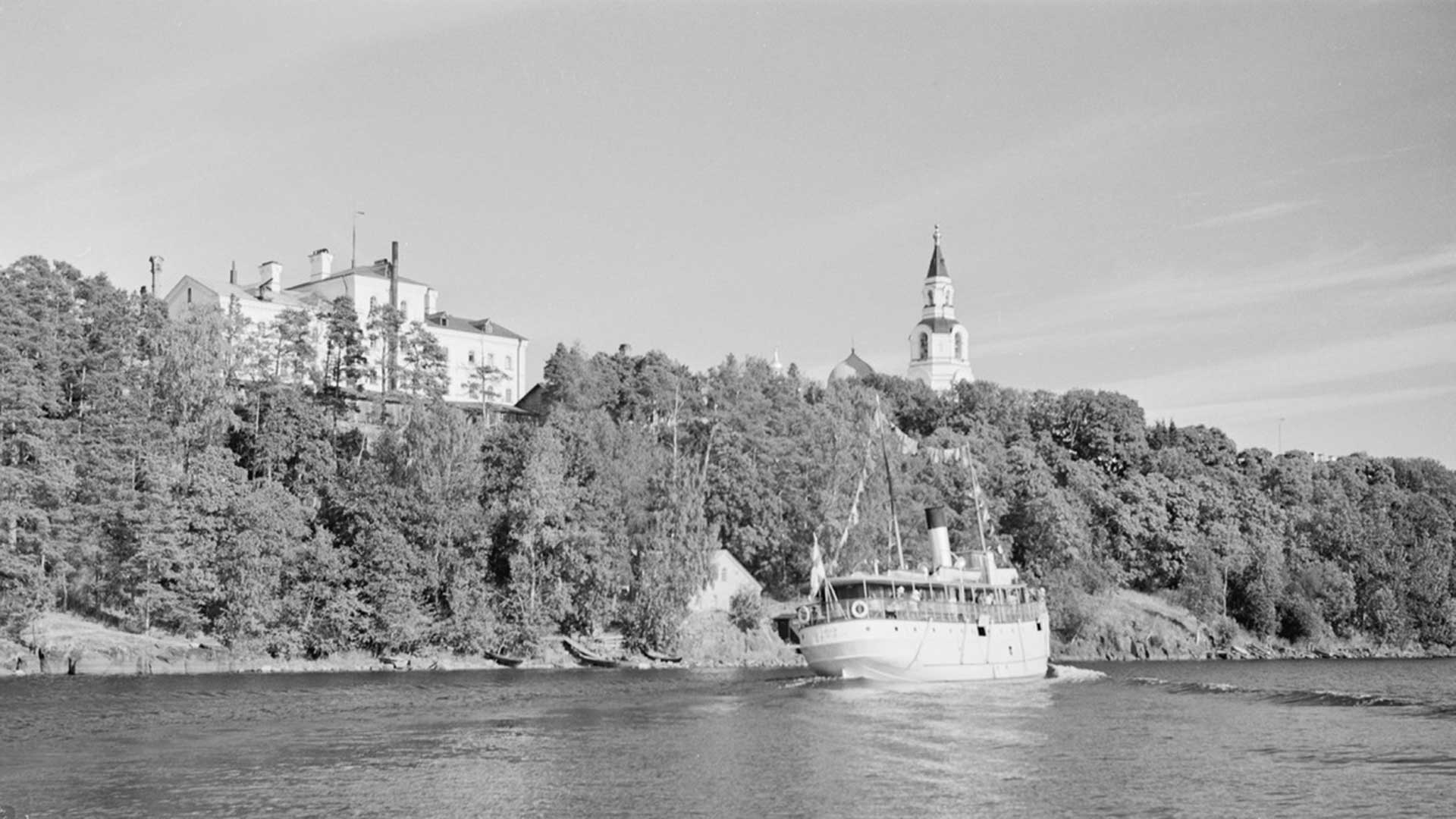
During the interwar period, the northern shore of Lake Ladoga developed into one of Finland's best-known tourist regions. Sortavala in particular rose to international fame as a tourist town, acting as a gateway to the Ladoga archipelago, the Valaam Monastery, and the hill landscapes of Karelia. At the same time, Käkisalmi was also experiencing its own tourism boom as a spa town and the gateway to Lake Ladoga.
The appeal of tourism around Lake Ladoga was based on a unique combination of Orthodox culture, lake scenery, an archipelago, steamship traffic, and international influences. The region was exotic to Finns yet easily accessible.
Railways and steamships opened up Karelia for tourism
The strong growth of tourism began in the late 19th century as transport links developed. Completed in 1893, the Karelian Railway connected Sortavala to Vyborg, Joensuu and St Petersburg. The train connection made Ladoga Karelia accessible to a wider group of travellers for the first time.
Alongside the railway, Lake Ladoga's steamship traffic formed the backbone of regional tourism. Regular steamship services departed from Sortavala harbour to Valaam, Lahdenpohja and Pitkäranta. Steamships such as Valamo Monastery yes Aallokas, carried large numbers of passengers across the open waters of Lake Ladoga in summer.
Lake Ladoga cruises became a symbol of tourism. The journey itself was considered an experience: the vast open waters, the narrow straits of the archipelago and the domes of the monasteries formed a view that travellers described as almost foreign. Particularly popular were the archipelago cruises to Riekkalansaari, Tulolansaari and the Valaam archipelago.
Sortavala – The tourism capital of Lake Ladoga
Sortavala developed into interwar Finland's most modern tourist town. The town combined Karelian culture, an international atmosphere and high-class services in a way that was exceptional in the Finland of that era.
Tourists were catered for by modern hotels, restaurants and guesthouses. The city’s most famous accommodation was the Seurahuone, designed by architect Uno Ullberg and completed in 1908. The hotel offered luxurious accommodation, banquet halls and restaurant facilities, and served as the hub of the city’s social life.
There were also several guesthouses and boarding houses in Sortavala. Summer visitors also sought out country villas and the tranquillity of the Lake Ladoga archipelago. In addition to the Finnish intelligentsia, tourists to the area included foreign travellers and visitors from St Petersburg.
Tourism was also actively promoted by the Finnish Tourist Association, which published multilingual guidebooks, employed guides and developed tourist routes and viewing points. At the same time, Sortavala became the main starting point for trips to Valamo.
Valamon Monastery – Lake Ladoga’s most famous attraction
The Valamo Monastery was the best-known tourist attraction in the whole Lake Ladoga region and one of Finland’s most popular places of pilgrimage. The journey from Sortavala to Valamo was made by steamboat, and even the few-hour boat trip across Lake Ladoga was part of the experience.
The monastery offered tourists accommodation, meals and guided tours. The archipelago’s churches, cellars, gardens and the monks’ way of life made a great impression on visitors. For many Finns, Valamo also served as a window onto Orthodox Karelia and Eastern spiritual culture.
The Finnish Tourist Association organised ready-made travel packages that included train journeys, boat transport and accommodation in the monastery. Valamo became both a religious and cultural attraction, the reputation of which was also widely known abroad.
Tourism directed towards the monasteries of Lake Ladoga was part of a broader Karelian Romanticism, where travellers sought a Karelian culture perceived as authentic, old traditions and peace in nature.
Käkisalmi – a spa town on the shores of Lake Ladoga
Käkisalmi developed tourism from a slightly different starting point than Sortavala. For a long time, the town's tourism centred on the Kalliosaari spa, which was founded in 1896.
Käkisalmi’s strengths lay in its beautiful natural surroundings, the Vuoksi river system and its relatively good transport links to St Petersburg. The town believed that the spa business would attract new tourists to the area and invested substantial sums in the project.
In summer, spa guests arrived in Kexholm from both the direction of Lake Ladoga and the Vuoksi River. People travelled from St Petersburg on Lake Ladoga steamers, the most famous of which were snow-white Concordia yes Dawn. The journey from Finland followed the Vuoksi route via Räisälä and Kaarlahti.
Contemporary descriptions tell of a relaxed summer town where ship decks were filled with parasols and multilingual socialising. However, the atmosphere of tourism was smaller-scale than in Sortavala, and Käkisalmi never grew into such a major international tourist centre.
The development of Kexholm was long restricted by inadequate transport connections. The long-awaited railway was not completed until 1917, at which time the era of the old spa culture was also already coming to an end. The significance of Lake Ladoga's shipping traffic gradually diminished, and tourism changed along with the transport of the new era.
Cruises on Lake Ladoga and the magic of tourism
The most important attractions of Lake Ladoga tourism were the water journeys themselves. Steamship cruises connected the towns, monasteries, and archipelago in a way that created a very special atmosphere for the whole region.
Boats were used to travel not only to Valaam, but also to smaller islands, fishing villages, and coastal parishes of Lake Ladoga. Summer cruises offered travellers views of rugged rocky shores, lush islands, and the rapidly changing weather conditions of Lake Ladoga.
In travellers' memories, Lake Ladoga appeared as an almost marine world – a vast expanse whose mists and storms left an impression on urban visitors. At the same time, the sheltered straits of the inner archipelago and the ringing of monastery bells created an experience considered unique throughout the whole of Finland.
Sources:
History of Käkisalmi, Kuujo, Käkisalmi Foundation 1958
Käkisalmi in Our Memories, Lyyli Ahonen (ed.)


