Green gold on Lake Ladoga
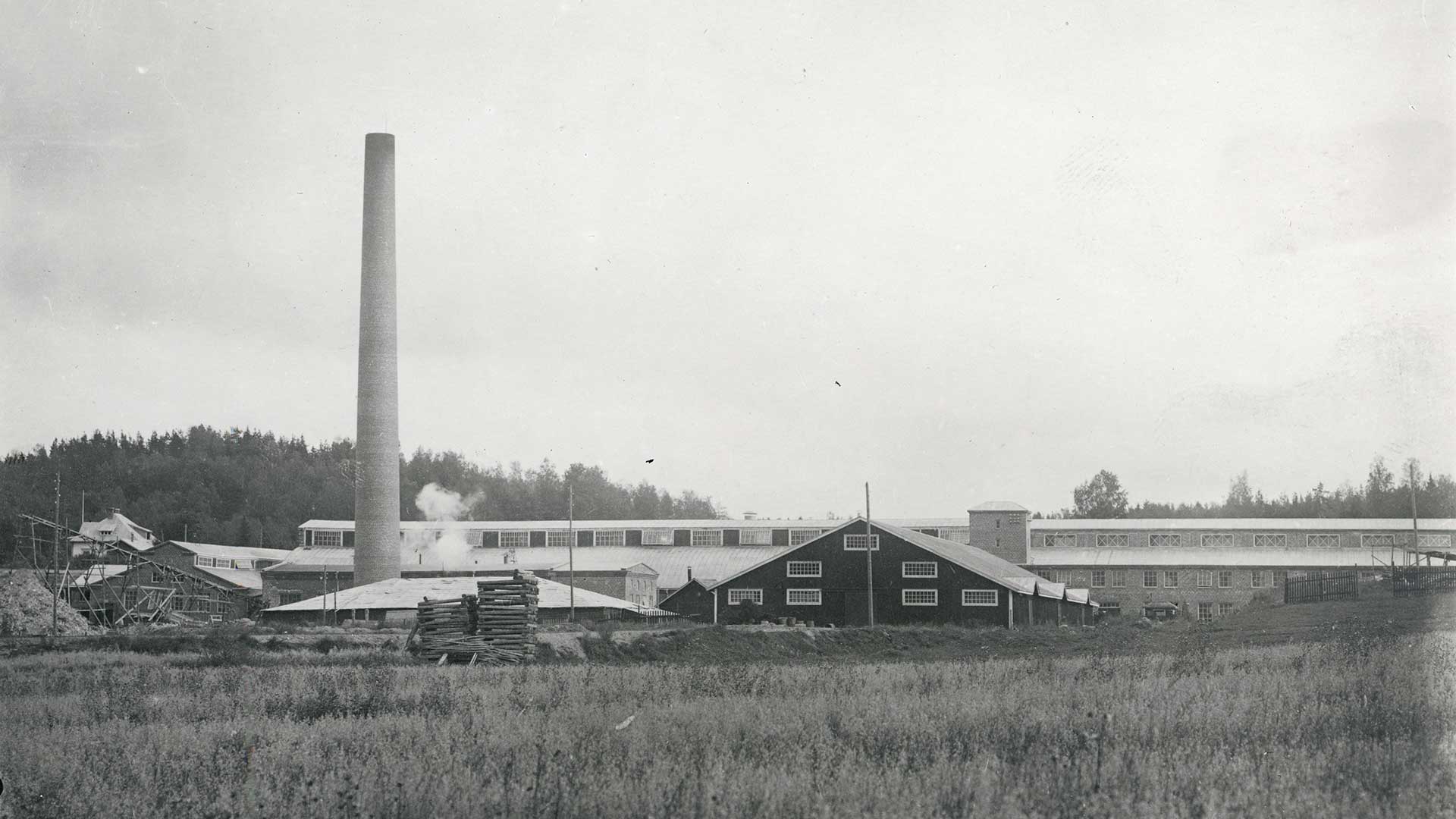
Sawmills were a typical industry in the north-western and northern parts of Lake Ladoga. The region offered them favourable conditions. There was plenty of timber in the forests, during the open-water season sawn timber was easy to transport across Lake Ladoga, and the region's many rivers with their rapids provided power. In addition, the building of St Petersburg from the early 18th century onwards guaranteed demand.
The first sawmill in the northern part of Lake Ladoga was apparently established in 1586, when the sawmill of Kexholm Fortress was completed for the needs of the castle's renovation. The sawmill equipment was dismantled and moved to the Sulkavala sawmill of Olavinlinna Castle when Kexholm was ceded to the Russians under the Treaty of Teusina in 1597.
When the construction of Saint Petersburg began in 1703, the demand for sawn timber grew. Sawmills were built particularly in the latter half of the 18th century. The builders were often merchants from Saint Petersburg and Vyborg.
During the 18th and 19th centuries, Ladoga Karelia belonged for the most part to the donation lands of Russian nobles. Count Alexei Orlov-Chesmensky in particular had large landed estates. After the Count's death in 1807, the property was inherited by Countess Anna Orlov-Chesmenskaya (1785–1848). In 1820, she owned several sawmills: there were two sawmills on the Tulemajoki river in Salmi and three along the Uuksujoki river. In the parish of Sortavala were the Helylä and Tuokslahti sawmills. Operating in Läskelä were the Petrakoski and Pitkäkoski sawmills, as well as two sawmills in Impilahti, and likewise in Syskyä. The sawmills had mainly been built in the latter half of the 18th century.
Orlov-Tsemensky sold all their sawmills in 1825 to St Petersburg merchants. Around the mid-nineteenth century, many sawmills were closed down as unprofitable.
Power for sawmills from steam
The era of steam-powered sawmills began in the 1870s, and water-powered sawmills gradually ceased operations. In the Ladoga region, steam sawmills were not built extensively until after Finland gained independence. At the same time, remote areas also gained good transport links.
After independence, several steam sawmills were established in the Kexholm region: the Suotniemi sawmill, Käkisalmen Saha Oy, Laatokan Saha Oy, the Räisälä sawmill, and Belaieff's sawmill.
In Lahdenpohja, the Annala sawmill was completed in 1919 and the Laatokan Puu Oy sawmill in 1932.
The largest sawmills in the Sortavala region were owned by Puuliike Supinen Oy, Suomalainen Puuliike Oy, Helylä Oy, and Oy Läskelä Ab.
Ore from the bottom of lakes
An ironworks and blast furnace founded by Anna Orlov-Chesmensky operated in the Suojärvi area from 1809. The ironworks, which utilised very high-quality iron ore lifted from the lakes, employed thousands of people in the mid-19th century. Operations ceased in 1905.
The Suojärvi railway was completed in 1922, after which the municipality industrialised very rapidly. Several sawmills and timber businesses were established there, as well as a ski factory, among other things. In 1910, agriculture had provided a livelihood for 99.6 percent of the inhabitants, but by 1939 the proportion of the industrial population was already 47.3 percent.
Suojärvi was known as the Klondike of Finland. In 1927, there were 1,500 men working in the sawmills and 2,000 in forestry. The cardboard mill established during the Finnish era is still operating.
The largest sawmill company in Suojärvi was Aunuksen Puuliike Oy. Carelia Timber Co. Ltd and the Liette sawmill also operated in Suojärvi. Aunuksen Puuliike also owned the Litsma and Lapinjärvi sawmills. Enso-Gutzeit Oy bought the company in 1937.
The other major sawmill company in Suojärvi was The Wiborg Wood Co, which built a sawmill in 1923. In 1927, Veljekset Kause & Co's Torasjoki sawmill started operating, followed by the Piitsjoki sawmill in 1935. Suojärvi also had several small sawmills.
Several sawmills in Suistamo
Sawmilling operations in the Suistamo area began in 1920 when Gösta Serlachius's Syskyjärven Hovi Oy built a sawmill. It operated for only four years. The Loimola sawmill was built in 1921 by Karjala Puu Oy, a company owned by businessmen from Hamina. The company was wound up in 1930. The Roikonkoski sawmill, leased by the Railway Board, operated in Suistamo from 1927 to 1939.
Sawmilling operations in the Impilahti region were started by the Norwegian sawmill entrepreneurs Diesen Wood Ab, which owned the Kotkaniemi sawmill in Salmi. For some time, the company also operated a mine and a metal processing plant in Pitkäranta. A new sawmill was completed in 1920 and a pulp mill a year later. The sawmill was one of the largest in Finland. In 1926, a chlorine factory was completed.
Sawmilling operations began in the Salmi region at the Hosainoff brothers' Miinala sawmill. After the border was closed, timber was transported to Kexholm. The company had offices in Kexholm and Viborg, but its main office was in the municipality of Salmi. The company also had a shipyards, a repair shop and a naval station. Oy Hosainoff was the largest industrial enterprise in Salmi, which went into administration in 1929.
Foreign trade was hampered by the fact that the right of passage along the Neva was disputed for a long time. When the railway to Käkisalmi and Suojärvi was completed, sawn timber from the shores of Lake Ladoga was also transported by rail to the port of Uuras in Viborg.
Following independence, the profitability of sawmills was excellent for several years, and the peak production volume of the sawmill industry was reached in 1927. The years 1928–1931 were difficult, and a number of sawmills had to close down. After that, profitability improved until 1937. Before the Winter War, there were two difficult years. Following the Winter War and the Continuation War, the sawmills and other industrial plants were taken over by the Russians.


