Fishermen of the Käkisalmi coast – the aristocracy of their profession
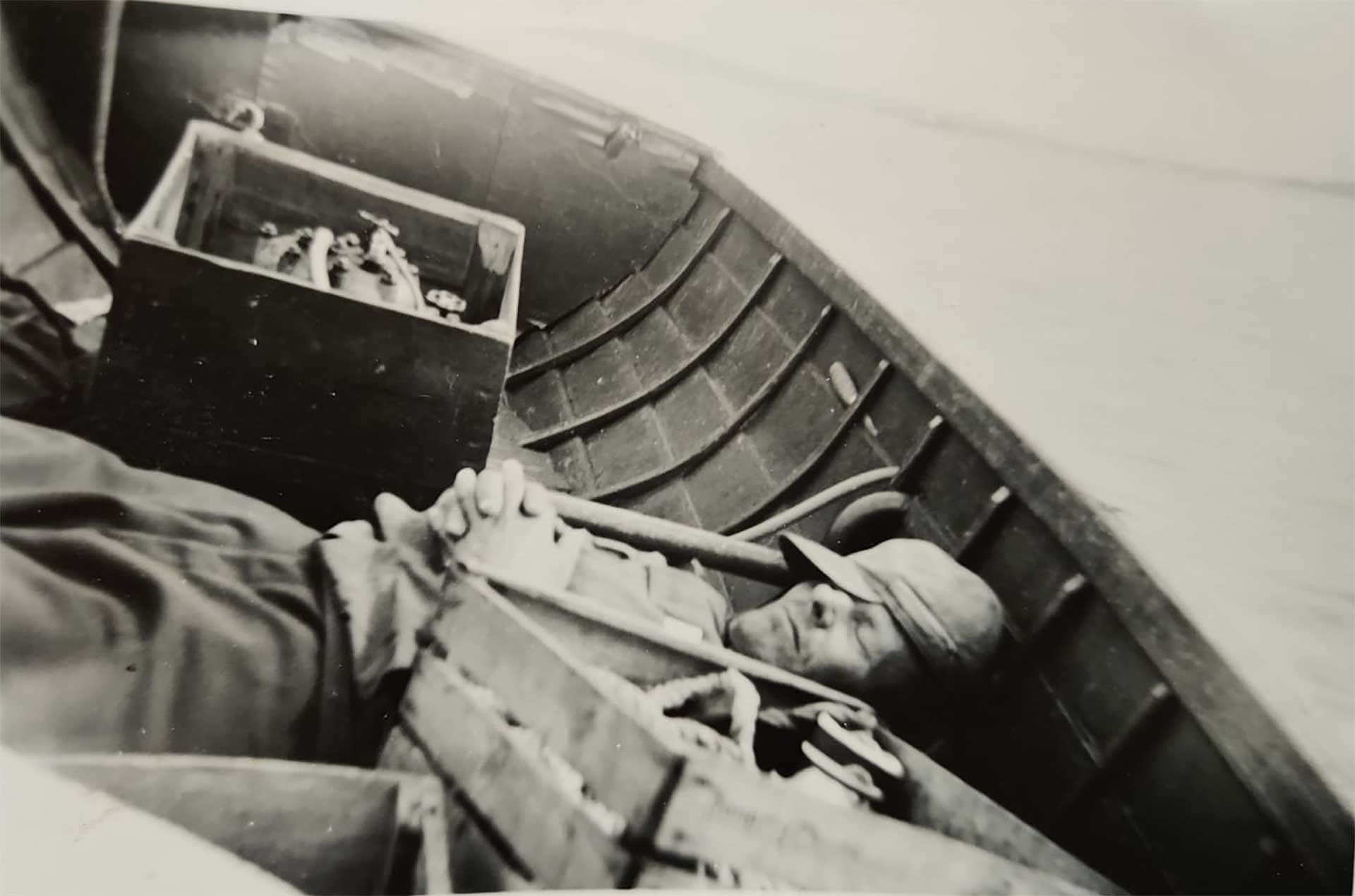
The Käkisalmi Coastal Fishermen’s Association was born at a time when Lake Ladoga was both a source of livelihood and a demanding working environment for the coastal people. The fishermen of the Käkisalmi coast were particularly known as skilled bait and hook fishermen who travelled in their large boats far out onto the open waters of Lake Ladoga in all seasons.
Fishing was hard and dangerous work. Longlines were extended for kilometres out into the open waters, and fishing was carried out in storms, freezing temperatures and the darkness of autumn. Lake Ladoga provided a livelihood, but at times also demanded heavy sacrifices. A shared profession, the sea and its dangers united the fishermen – and this community spirit also gave rise to organised activity.
Active fishing club
 The inaugural meeting of the Käkisalmi Coastal Fishermen’s Association was held on 31 March 1924 in Vuohensalo at Heikki Vuohelainen's house. Around forty fishermen and industry experts from Helsinki and Sortavala arrived at the venue.
The meeting was chaired by teacher Matti Kallonen, and it was decided unanimously to establish the society. The area of operation included the villages of Vuohensalo, Ylä-Puusti, Pörtsikkä, Tenkalahti and Pärnä, as well as the town of Kexholm.
Antti Kotti was elected as the first chairperson. Already in its early years, the club joined the Central Union of Lake Ladoga Fishermen’s Clubs, through which the coastal fishermen gained a connection to the broader development of the fishing industry.
The association actively acted as an interest group for commercial fishermen and also engaged in cooperative business by making joint purchases of fishing gear and providing loans for the fishermen's acquisitions.
The society rented a base for long fishing trips on Vassinoy Island, which is under the administration of Valaam Monastery. The rent for the base was paid in fish that were not always the freshest, recalled the igumen of Valaam Monastery regarding the society's activities.
Vuohensalo fish and emergency station
In the early years of its operation, the club set about promoting the construction of the Vuohensalo fishing and emergency harbour. The open coast of Lake Ladoga was particularly dangerous during autumn storms, when fishermen needed a safe landing spot.
The Vuohensalo fishermen justified the project on the grounds that the ports on the Metsäpirtti coast froze early in the winter, which increased the importance of Vuohensalo for fishermen all along the northern coast of Lake Ladoga. However, the port project progressed slowly due to a lack of government funds.
In 1932, the club appealed once again to the Council of State, emphasising the growth of open-sea fishing and the increase in motorboats. The lack of a harbour had become a direct safety issue, as the open coastline had claimed the lives of several fishermen.
Although there was no time to build an actual large harbour before the wars, the club managed to get its own pier. In 1937, it was decided to build a harbour pier through voluntary labour, and the pier was completed as early as the same spring.
With the aid of funds received from the state, a further 140-metre-long breakwater with its retaining walls was completed at Vuohensalo harbour in 1938.
 Lake Ladoga – a harsh and treacherous master
The summery calm Lake Ladoga has remained in the minds of many who have experienced the lake as an unforgettable experience, but the lake could be deceitfully dangerous. This is also told by the life destinies of the fishermen of Vuohensalo.
Before the completion of Vuohensalo harbour and breakwater, boats had to be kept on a shore exposed to heavy swells. Coming ashore during a storm was often difficult and even dangerous. Setting out onto Lake Ladoga also had its challenges. In strong winds, one had to leave the shore bow first so that the waves would not fill the boat with water. Therefore, boats were usually hauled ashore stern first. Elsewhere in Finland, boat keels typically deepened towards the stern, and such a boat would be difficult to pull ashore stern first. For this reason, in Ladoga fishing boats, the deepest point of the keel was at the bow.
Heikki Vuohelainen, who was one of the founders of the Käkisalmi Coastal Fishermen's Association and later moved to Heinola as an evacuee, lost his father to the rough waters of Lake Ladoga. The same fate had befell his grandfather. At the age of nine, Heikki became the only male in the fishing homestead on Vuohensalo. Earning an income for the four-child family fell largely on the young boy's shoulders. Heikki's career as a professional fisherman began early.
Summer festival brought together the people of the Lake Ladoga coast
The activities of the fishermen's association were not limited solely to the handling of professional matters. In 1929, the association bought a house in Tahkoniemi from Heikki Yrjönpoika Vuohelainen on the shore of Vuohensalo right at the water's edge, and it was made into a base, a storehouse and a clubhouse for the fishermen's association.
The clubhouse was an important base for fishermen, where they could stay overnight during the fishing seasons, hold meetings and organise parties. The building's regulations tell a lot about the fishing community of the era: alcoholic drinks, card playing and “obscenities” were forbidden, and the use of the buildings was strictly monitored.
The storehouse was used for drying and storing gear. It was the caretaker's job to keep the buildings warm and in good condition.
The club's most prominent events were the annual summer festivals, which were often held on the shore of Tahkoniemi. The programme combined fishing culture, competitions and a folk festival.
Rowing and sailing competitions were organised at the festival, followed later by motorboat races. In addition, the programme included speeches, presentations, singing, recitation and dancing. Popular competitions also included horseshoe throwing, javelin throwing and nail driving.
In 1933, Käkisalmen Sanomat described the Vuohensalo fisherman festival as extremely successful. At the event, people talked about cooperation among fishermen, the preservation of fish, and the catching of salmonid fish. Fish soup was offered to the audience, and a play was performed at the end of the festival By Lake Saimaa.
The war cut off Lake Ladoga's fishing life
The Winter War brought the club's activities to an almost complete halt. Fishing on Lake Ladoga was suspended, the fishermen were at the front and a large portion of the equipment was lost.
However, the evacuated members gathered as early as October 1940 at the Herttua primary school in Ylistaro and decided to continue their activities. During the Continuation War, some of the members returned to the shores of Lake Ladoga.
The wartime minutes show material shortages and scarcity. Fishing lines, nets, ropes, and engine paraffin were carefully rationed. Every single net and piece of gear was important.
During the war, the Lake Ladoga Fishermen’s Association sought to revive fishing on Lake Ladoga as quickly as possible. Fishermen were seen as important food producers, and the association cooperated with the military administration to organise equipment, boats and labour.
A fresh start in Heinola
The final evacuation journey also marked the beginning of a new phase in the club's history. The first post-war meeting was held on 5 January 1947 at the Café Oululainen in Heinola.
Because a large proportion of the members had settled in Heinola and its surroundings, the club decided to continue its operations in its new home region. Heinola became the association's new registered office.
Heikki Vuohelainen was one of the fishermen who continued professional fishing on Lake Ruotsalainen in Heinola. Other fishermen who settled in Heinola included Aarne A. Bogdanov, Eero Javanainen, Valtteri Kotti and Tuomas Pärssinen.
Vuohelainen built a new home in Siniläuhde and a fishing jetty and a shed in Ruukinpohja. Vuohelainen was also active in the new fishermen's association. Alongside Heikki's own son Erkki, many other sons of Karelian evacuees received their first lessons in fishing on Kollarinselkä while vendace fishing.
In the 1950s, the club joined the Southern Finland Sea Fishermen's Association and continued its active operations. In 1958, a private fishing cabin with a smoke sauna was built on the island of Ruotsalainen. “Tuulentupa” became the base for the club's members for decades.
Active club member Heikki Vuohelainen died of cancer at the age of 59 in 1963.
Although commercial fishing has gradually declined in Heinola, fishing has remained an important hobby and way of life for many. The club has also participated in fish stocking and the management of fishing waters together with other fishing clubs in the Heinola region.
In the 21st century, the club's membership has decreased, but a large proportion of members still have Karelian roots. In 2024, the association celebrated its 100th anniversary. Memories of the open waters of Lake Ladoga, the shores of Vuohensalo and the traditions of the fishing community live on, and the descendants of the evacuees occasionally visit to share stories from the Karelian Sea.


